There is a stubborn myth in my industry that you have two choices for IT: build your own internal team, or hand everything to an outside provider. All in, or all out. I have never believed that, and after decades supporting Tulsa businesses I can tell you the reality is far more flexible. Co-managed IT is the option nobody explains clearly, and for a lot of growing businesses it is the best fit of all. So let me lay it out plainly: what co-managed IT is, how it works, and when it makes sense.
What Is Co-Managed IT?
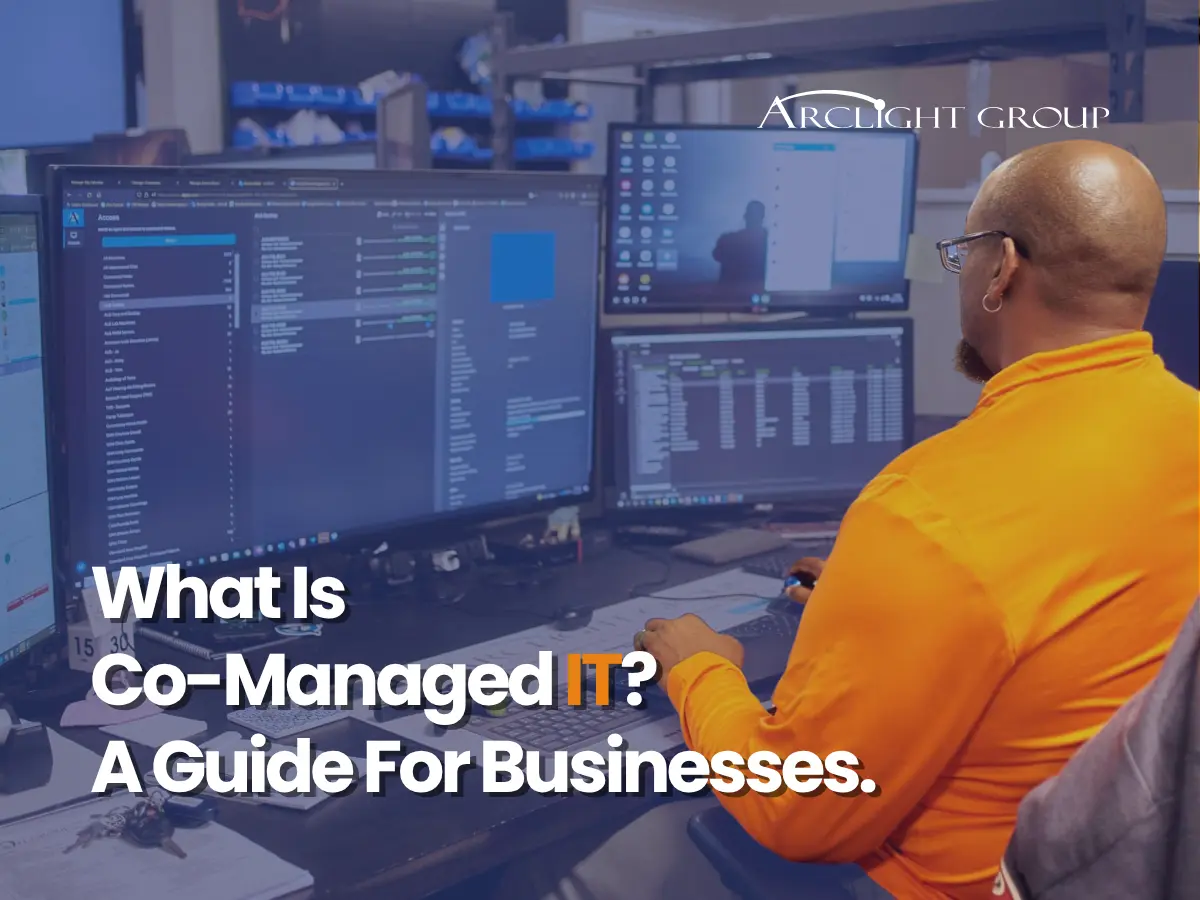
Co-managed IT is a partnership model where an external IT provider works alongside your internal IT staff (or power user) rather than replacing them. Your team stays in place. The provider fills the gaps, whether that means added expertise, extra hands, after-hours coverage, specialized security tools, or strategic guidance. You share the responsibility instead of handing it off entirely.
Think of it as reinforcement rather than replacement. Your internal person or team knows your business intimately. A co-managed partner brings the broader bench of specialists, the enterprise-grade tools, and the round-the-clock coverage that a small internal team cannot realistically provide on its own. Together they cover more than either could alone.
Co-Managed IT vs. Fully Managed IT vs. In-House
The easiest way to understand co-managed IT is to see it next to the alternatives. Each model fits a different kind of business:
| Model | How It Works |
|---|---|
| In-house IT | Your own employees handle everything. Full control, but limited by one team’s capacity, expertise, and hours. |
| Fully managed IT | An outside provider handles all IT. Broad expertise and coverage, with less day-to-day internal involvement. |
| Co-managed IT | Your internal team and an external provider share the work. Internal knowledge plus outside depth, scaled to what you need. |
None of these is universally better. The right choice depends on your size, your existing staff, and where your gaps are. I wrote more about that decision in my piece on in-house IT versus MSPs, which digs into how to think it through for your own situation.
How Co-Managed IT Actually Works
In practice, the internal team and the provider divide responsibilities based on strengths. A common split looks like this:
- Your internal team handles the day-to-day: user support, the systems they know best, and the business context that only an insider has.
- The provider handles the specialized and heavy-lifting work: security operations, patching at scale, backups, compliance, and strategic planning.
- Both share coverage. When your internal person is on vacation, sick, or simply overloaded, the provider keeps things running.
The exact division is flexible, and that is the point. A good co-managed arrangement is designed around what your team already does well and what it needs help with, rather than forcing a one-size-fits-all package.
When Co-Managed IT Makes Sense
Co-managed IT tends to be the right call in a few recognizable situations:
- You have internal IT, but they are stretched thin. One or two capable people cannot cover every specialty and every hour. A co-managed partner extends their reach.
- You are growing fast. Scaling an internal team takes time and hiring risk. A provider adds capacity immediately as you grow.
- You have new security or compliance demands. Regulations and threats often outpace a small internal team’s bandwidth. Outside expertise closes that gap quickly.
- Your team is strong on operations but light on strategy. A co-managed partner can bring the planning and roadmap work that keeps technology aligned with the business.
The Benefits of a Co-Managed Model
The appeal of co-managed IT is that you keep what works and add what is missing. Your institutional knowledge stays in-house. You gain access to a full team of specialists and enterprise tools without a wave of new hires. Coverage extends to nights, weekends, and holidays. And critically, your security posture improves, which matters more every year. This is the model we run for a lot of clients at ArcLight Group: your internal person keeps owning what they know best, and our team adds 24/7/365 monitoring and independently validated SOC 2 security practices on top. The Cybersecurity and Infrastructure Security Agency emphasizes that layered defenses and continuous monitoring are essential for smaller organizations, and those are exactly the capabilities a co-managed partner adds. The National Institute of Standards and Technology cybersecurity framework similarly stresses continuous detection and response, which is hard to sustain with a lone internal technician.
Frequently Asked Questions
What is co-managed IT?
Co-managed IT is a partnership model where an outside IT provider works alongside your internal IT staff instead of replacing them. Your team keeps handling what it does best, and the provider fills gaps such as security, after-hours coverage, specialized tools, and strategic planning.
How is co-managed IT different from fully managed IT?
With fully managed IT, an outside provider handles all of your IT. With co-managed IT, your internal team stays in place and shares responsibilities with the provider. Co-managed suits businesses that have internal staff but need added depth, coverage, or expertise.
Is co-managed IT more expensive than hiring more staff?
Usually it is more cost-effective. Instead of hiring, onboarding, and paying full salaries for additional specialists, you gain access to a whole team and enterprise tools through the provider, scaled to the specific gaps you need to fill.
What size business is co-managed IT best for?
Co-managed IT is often ideal for growing small and mid-sized businesses that already have one or a few internal IT people who are stretched thin. It also suits organizations facing new compliance or security demands that outpace their internal capacity. View our industries page to see more about the businesses ArcLight Group supports.
Can co-managed IT help with cybersecurity and compliance?
Yes. Security and compliance are among the most common reasons businesses adopt a co-managed model. A provider brings dedicated security operations, monitoring, and compliance expertise that a small internal team often cannot sustain on its own.
Let’s Find Your Right Split
The best part of co-managed IT is that it bends to fit your business rather than the other way around. If you have an internal team that could use reinforcement, or you are trying to decide how much to keep in-house, let’s talk it through. We support businesses across Tulsa, Broken Arrow, Owasso, Oklahoma City, and the surrounding communities, and we can scale our role up or down as your needs change. We can also handle the load fully if that turns out to be the better fit; our managed IT services page explains that side of the spectrum.
By Brian Largent, CEO & System Architect

Brian Largent
Father to five, husband to one, founder, CEO, and all around swell fella (or so I'm told)